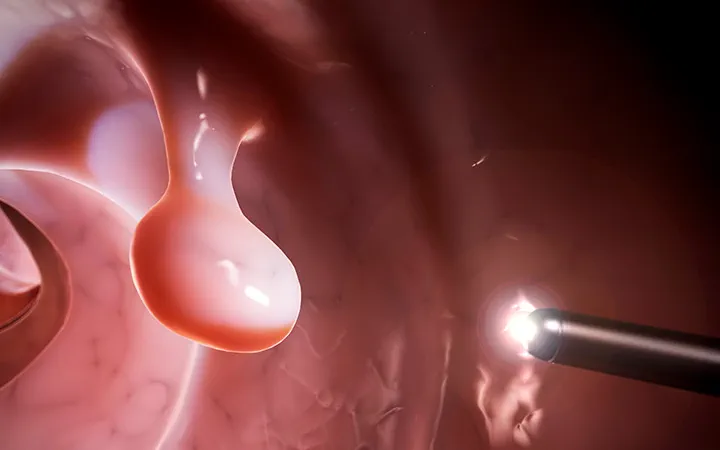
Colonoscopy with biopsy
A colonoscopy uses a flexible tube called a colonoscope, which has a tiny camera attached to its tip. This allows doctors to view the entire colon and rectum on a monitor.
During the procedure, if any suspicious tissue, polyps, or inflamed areas are seen, the doctor may take a biopsy—a small sample of tissue. This sample is sent to a pathology laboratory, where it is examined under a microscope to determine the cause of the abnormality.
Why is a Colonoscopy with Biopsy Performed?
Colonoscopy with biopsy is performed for both diagnostic and preventive purposes. Some common reasons include:
- Colorectal cancer screening – Detecting and confirming cancerous changes.
- Polyp evaluation – Determining whether a polyp is benign, pre-cancerous, or malignant.
- Chronic diarrhea or constipation – Identifying inflammatory or infectious causes.
- Unexplained gastrointestinal bleeding – Locating the source and confirming the cause.
- Inflammatory bowel disease (IBD) – Diagnosing conditions such as ulcerative colitis and Crohn’s disease.
- Unexplained anemia – Finding hidden blood loss in the colon.
Preparation for Colonoscopy with Biopsy
Successful results depend on a clean colon. Preparation usually includes:
- Dietary restrictions – A low-fiber diet followed by a clear liquid diet 24 hours before the test.
- Bowel cleansing – Drinking a prescribed laxative solution to empty the colon.
- Medication adjustments – Informing the doctor about blood thinners, insulin, or other medications.
- Fasting – Avoiding food and drink for at least 6–8 hours before the procedure.
How is a Colonoscopy with Biopsy Performed?
The procedure usually takes 30–60 minutes.
- Sedation – Patients are given sedatives or anesthesia for comfort.
- Insertion of colonoscope – The flexible tube is inserted through the rectum and carefully advanced through the colon.
- Inspection – The lining of the colon is examined for polyps, ulcers, inflammation, or tumors.
- Biopsy collection – Using special instruments, the doctor removes small pieces of tissue from suspicious areas.
- Completion – The colonoscope is withdrawn slowly, allowing a second careful inspection.
Conditions Diagnosed with Colonoscopy Biopsy
A biopsy provides confirmation of diagnosis in conditions such as:
- Colorectal cancer
- Precancerous polyps
- Ulcerative colitis and Crohn’s disease
- Microscopic colitis
- Infectious colitis
- Ischemic bowel disease
- Unexplained bleeding lesions
Benefits of Colonoscopy with Biopsy
- Early cancer detection – Detects cancer in its early, more treatable stages.
- Accurate diagnosis – Provides microscopic confirmation of disease.
- Prevention – Polyps and abnormal tissue can be removed before becoming cancerous.
- Dual purpose – Both visual inspection and tissue sampling in one session.
- Guided treatment – Helps doctors design a targeted treatment plan.
Risks and Complications
While generally safe, some risks exist:
- Bleeding at the biopsy site (usually minor).
- Infection (rare).
- Perforation of the colon (very rare, less than 1 in 1000 cases).
- Sedation-related side effects such as nausea or drowsiness.
Most complications are mild and manageable with prompt medical care.
Recovery and Aftercare
After the procedure:
- Observation – Patients rest until sedation wears off.
- Mild symptoms – Temporary bloating, gas, or slight bleeding may occur.
- Diet – Normal diet can usually be resumed the same day unless instructed otherwise.
- Activity – Driving is not allowed for 24 hours due to sedation.
- Follow-up – Pathology results are usually available within a few days.
Colonoscopy with Biopsy vs. Colonoscopy Alone
- Colonoscopy alone allows visual inspection and polyp removal.
- Colonoscopy with biopsy goes further by confirming the exact nature of tissue abnormalities, making it more diagnostic and reliable.
When Should You Consider Colonoscopy with Biopsy?
- If you are over 45 years old for routine cancer screening.
- If you have family history of colorectal cancer or polyps.
- If you experience unexplained rectal bleeding, anemia, or chronic bowel changes.
- If your doctor suspects IBD or infections.